
Why Free Medical Outreach Matters: 7 Health Challenges Nigerian Communities Face — And How We Are Responding
When healthcare comes to the people, lives are saved, hope is restored, and communities become stronger.
The Reality of Healthcare Access in Underserved Communities
In many parts of Nigeria, visiting a hospital is not as simple as taking transport across town. Clinics may be far away, poorly equipped, or simply too expensive for low-income families. Some communities have no resident doctor at all. For them, minor illnesses can quickly become emergencies, and preventable conditions may lead to disability or death.
Free medical outreach bridges this gap. Instead of asking families to travel long distances and pay consultation fees, outreach programmes bring doctors, nurses, medicines, and screening services directly to the community. The HRM Osana Emmanuel Onyatikpo Elayo Foundation is deeply committed to this approach.
Seven Common Health Challenges We See on the Field
During outreach programmes, our medical team repeatedly encounters a pattern of health issues, including:
- Hypertension: Often called the “silent killer,” it shows few symptoms until complications arise.
- Diabetes: Many people are unaware of their blood sugar levels until they experience serious complications.
- Malaria: Still a leading cause of sickness, especially among children and pregnant women.
- Respiratory infections: Linked to overcrowded housing, dust, and smoke from cooking.
- Maternal and child health issues: Limited access to antenatal care can result in dangerous pregnancies and deliveries.
- Untreated wounds and skin infections: Simple injuries can worsen without basic medical attention.
- Lack of health information: Many illnesses are worsened by a lack of knowledge about prevention and early treatment.
These challenges are serious—but they are also manageable when people are given access to examination, medication, and education.
What Happens During a Medical Outreach?
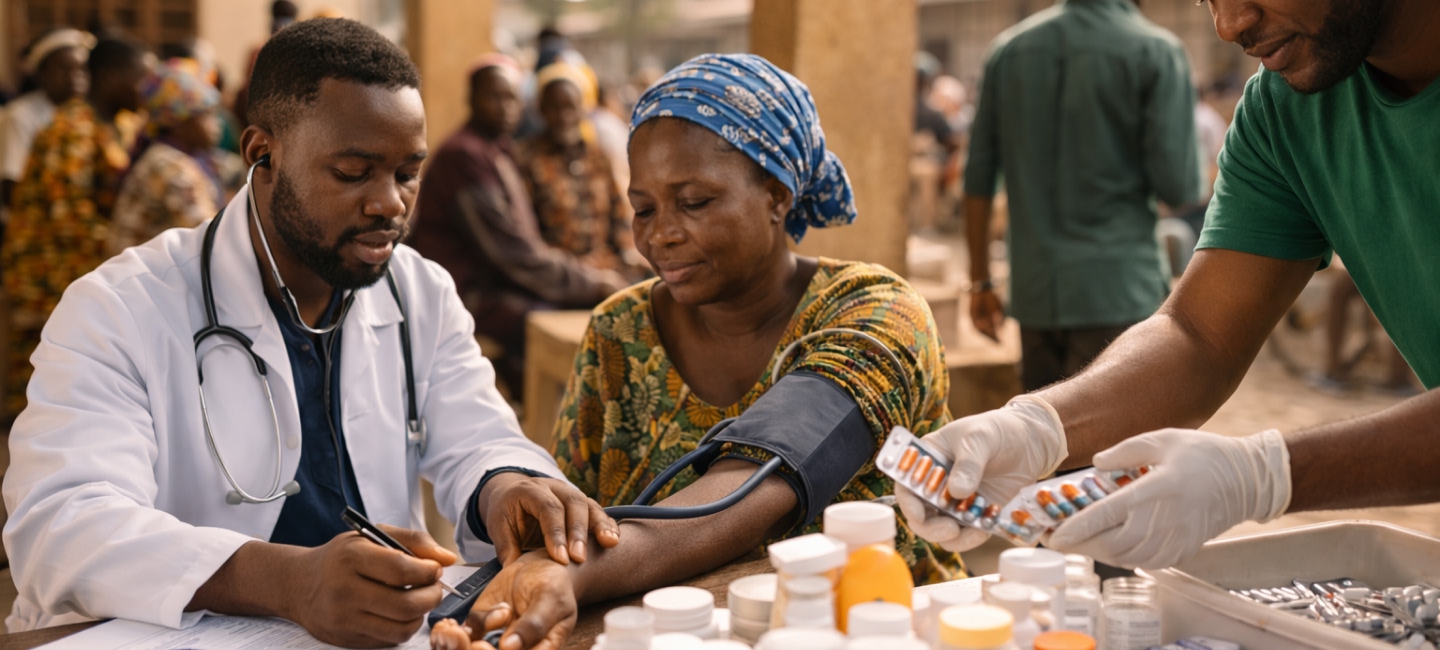
A typical outreach day is carefully planned. Community leaders are informed ahead of time, a suitable venue is prepared, and families begin to gather early. The Foundation’s team sets up stations for registration, vital signs, consultation, pharmacy, and health education.
- Screening: Blood pressure, blood sugar, weight, and basic checks are carried out.
- Consultation: Patients sit with doctors or nurses, who listen to their concerns and examine them.
- Medication: When needed, free medicines are dispensed with clear explanations.
- Referrals: People with more serious conditions are referred to nearby hospitals.
- Education: Group talks are held on hygiene, nutrition, family planning, and disease prevention.
For many participants, this is the first time in years—or ever—that they have had a proper consultation with a trained health professional.
Stories of Lives Changed
At one outreach, an elderly woman complained of constant headaches and dizziness. After checking her blood pressure, the team discovered she had severe hypertension. She received medicine and was referred for further care. Months later, she reported that she could walk, farm, and sleep without the fear of collapsing.
In another case, a young mother brought her child with recurring fever. The child tested positive for malaria and was treated immediately. Without this outreach, the family might not have sought help until the situation became critical.
Behind each case file is a real human story—a person whose life trajectory changes because someone cared enough to bring healthcare to them.
Why Free Medical Outreach is a Smart Investment
Medical outreach does more than treat illness. It prevents costly emergencies, supports productivity, and builds trust between communities and healthcare workers. Healthy people are better able to work, attend school, care for their families, and participate in the development of their communities.
For donors and partners, sponsoring outreach days is one of the most efficient ways to make a measurable impact. A single outreach can serve hundreds of people in just one day and provide data that helps improve future health planning.
How You Can Support Ongoing Medical Outreaches
You can play a part in sustaining and expanding these life-saving efforts:
- Fund an outreach day: Your support can cover medical supplies, logistics, and personnel.
- Give monthly: Regular giving allows the Foundation to plan long-term outreach schedules.
- Donate medicines or equipment: In line with regulations, approved items are distributed to those in need.
- Partner as a medical professional: Volunteer doctors, nurses, and pharmacists multiply the impact of each programme.
Whether you give once or give monthly, you become part of a community that believes no one should suffer in silence simply because they are poor or live far from a hospital.
Health, Hope, and a Stronger Future
When medical outreach vehicles drive into a community, they bring more than stethoscopes and tablets. They bring hope, reassurance, and the message that every life matters. With your partnership, the HRM Osana Emmanuel Onyatikpo Elayo Foundation can reach more villages, treat more families, and prevent more tragedies before they occur.
Healthy communities build a healthy nation. Together, we can ensure that even the most remote families are not left behind.